


Paralympian Robins’ wheelchair basketball ‘full‑circle’ moment in Germany
BOCHUM - Kim Robins wore the famous Aussie green and gold in 5x5 wheelchair basketball at the Tokyo 2020 Paralympic Games, finishing fifth, but his journey stretches far beyond Australia.
Germany has been more than a mere stop on his map; it has been a forge, a stage and a home.
1
/ 1
Open gallery
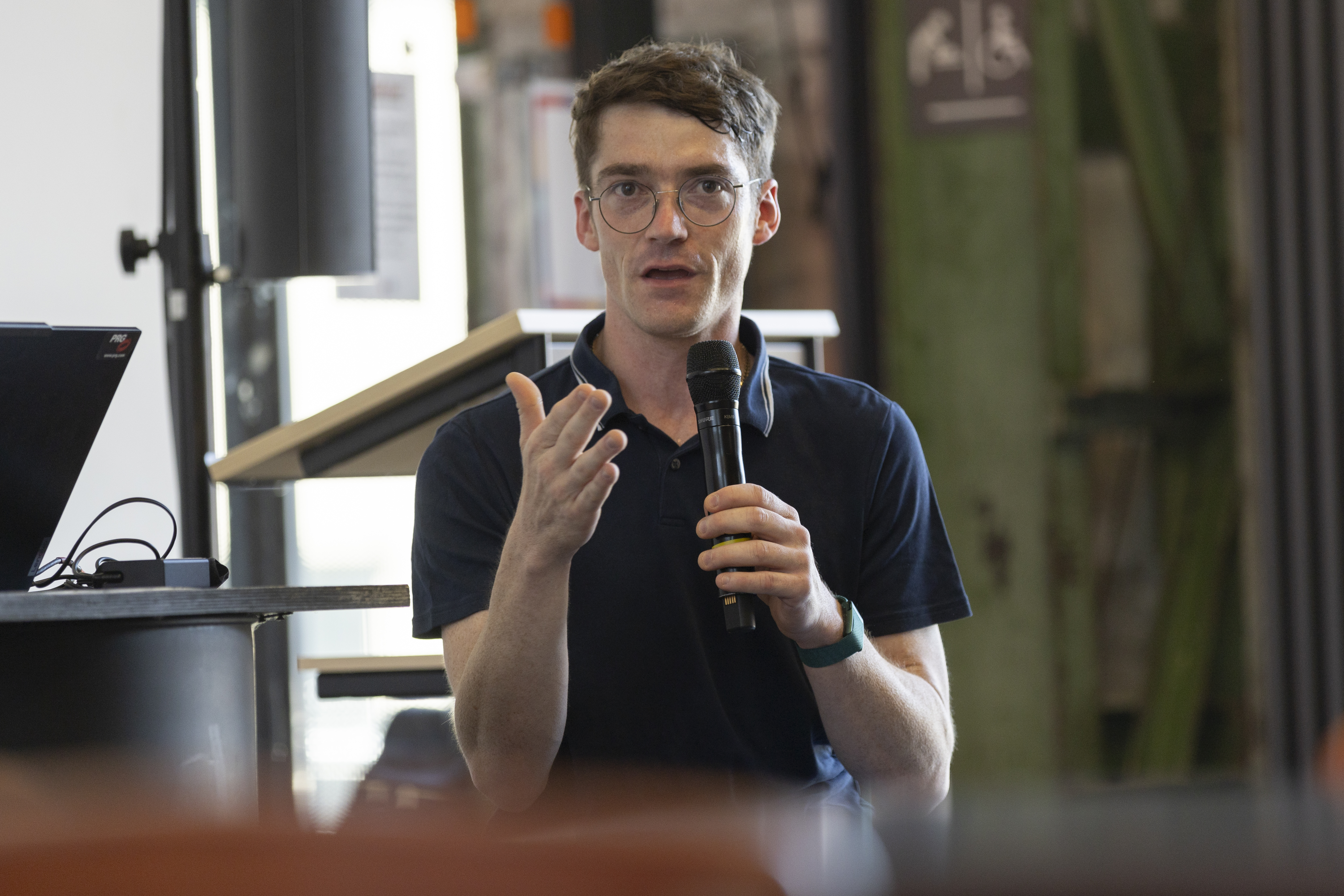
For Robins (pictured above), it feels almost destined that the Para sport – in its 3x3 format – makes its FISU World University Games debut at Rhine-Ruhr 2025, in the country that helped open new chapters in his life.
“It is really awesome to see wheelchair basketball at the World University Games for the first time,” the 37-year-old told the FISU Games News Service, shortly after speaking at the FISU World Conference in Bochum.
“It’s a little bit of a personal full‑circle moment for me because I remember when I was studying at university in Australia a long time ago, a bunch of my friends went to the University Games and there wasn’t an option for me to go.
“So to see the sport in action was so nice when I arrived for my workshop on inclusivity at the Conference on Saturday.
“It felt like a moment where you think, ‘Oh, there’s a whole new world of possibilities for people with a disability who are going to university in regards to participating in sport.’”
German beginnings
Robins, who has used a wheelchair since childhood because of a rare neural tube defect that affected his early development, first came to Germany in 2012 on a Bundesliga contract in Trier, close to the border with Luxembourg.
Having played in Rome and Spain, his time in Germany helped him become a regular member on the Australian senior men’s wheelchair basketball team in 2017.
With a master’s in finance from the Royal Melbourne Institute of Technology, he has been employed in big tech in Germany since 2020 and also advocates for inclusion in sport.
“There aren’t many major sports events where disabled and able‑bodied competitions are combined, apart from some world championships, and it’s still quite a new thing,” Robins said.
“I saw the Spanish wheelchair basketball team getting out of their bus and it was a really nice moment.
“It’s such a special thing when you have athletes from all disciplines coming together and, similarly, able‑bodied athletes and disabled athletes.
“It’s just nice because you have this common respect between all the athletes.
“It’s definitely a really awesome development from sport as an ecosystem, and also for pathways and opportunities for disabled athletes.”
Love and life in Germany
Having spent several years in Munich, Robins now lives in Nuremberg with his wife Jessica, a high‑school teacher, and their five‑year‑old son, Owen.
“I first met Jess, a German, when she walked into a basketball game in Munich,” Robins said.
“In 2018, I competed in the world championships in Hamburg, where Australia won bronze.
“After I came back from the tournament, I ended up getting engaged to her and then we got married at the end of the year.
“So, yeah, the Germany connection is there, too, in a strong way.”
Their home is a lively combination of cultures, a reflection of how Robins’ career bridged two worlds.
“In general, Australia and Germany share an appreciation for outdoor activity and are multicultural countries, so that’s a common thread already,” he said.
“Our family is a mix of both Australian and German traditions. My little boy, who was born in Germany, speaks both German and English.
“And we often celebrate Christmas on the 24th in the German tradition, and again on the 25th in the Australian way.”
Power of diversity
For Robins, this cross‑cultural life has been as rewarding as any medal.
“One of my favourite things about sport is how it constantly exposes you to different cultures,” he said.
“Whether I think back to playing in the Bundesliga, competing at a Paralympics, or simply living in Europe, I’ve been surrounded by diversity.
“That’s what makes sport so special. It creates a multicultural perspective on and off the field.
“At university level, the FISU Games do the same – and (they do it) on a grand scale, like this one in Germany.”
FGNS ag/pp/mb